In the summer of 2008, New York City lowered the threshold for activating its emergency heat plan.
The city had historically relied on the National Weather Service threshold of a heat index of 105 F (40.6 C), but they noticed that people were getting heat stroke at lower temperatures.
As part of a wider effort, they changed the alert threshold: it would trigger if the temperature reached 100 F (37.8 C) for a day, or 95 F (35 C) for two days in a row. When the threshold was reached, city officials conducted targeted outreach, including to vulnerable groups, like homeless people; alerted residents on their phones; launched measures to protect the power and water supply; and opened cooling centers.
Lowering this threshold correlated with a more than 50% reduction in hospitalizations for heat stroke and related illnesses on hot days.
New York's case study offers one of the clearest examples of an intervention that worked to protect people from deadly heat.
The strongest evidence is where these approaches reduce illness, hospital visits or death, not just heat exposure, pollution levels or other intermediate markers.
Charles Leonard, associate professor of epidemiology at the University of Pennsylvania
As the planet warms, we will need to find more of these solutions. The consensus among scientists is that the most effective way to avoid the worst health outcomes of climate change is to slow warming by reducing carbon emissions. Limiting warming to 1.5 degrees Celsius (2.2 degrees Fahrenheit), for instance, would mean 11,600 fewer deaths due to wildfire smoke exposure in the U.S. annually, compared with warming of 5.4 F (3 C).
But even if we rapidly reduce emissions, climate change will have wide-ranging effects on our health
So what measures actually work to protect people's health? Live Science reviewed dozens of studies and talked with 19 climate and health experts at universities and health and climate associations, to identify the most promising solutions to two of the biggest climate-related threats: extreme heat and wildfire smoke.
Some interventions have demonstrated a reduction in deaths or disease at the population level, while others have used modeling to predict health impacts or rely on proxy measures.
"The strongest evidence is where these approaches reduce illness, hospital visits or death," said Charles Leonard, an associate professor of epidemiology at the University of Pennsylvania, told Live Science, "not just heat exposure, pollution levels or other intermediate markers."
Most solutions do not offer the level of clarity of the New York example, however. Many reduce temperatures or alter human physiology in ways that are likely to decrease the number of heat-related deaths or cases of illness. But a deeper examination reveals limited evidence that many seemingly intuitive interventions, such as cooling centers, are effective on a societal level.
For both heat and wildfire smoke exposure, we analyzed the evidence to see which interventions have actually worked.
Extreme heat
Air conditioning and heat pumps
Evidence grade: Strong
One of the most common interventions for managing indoor temperatures is the use of mechanical systems with refrigerants, such as air conditioning or heat pumps.
Air conditioning has been tied to reduced hospital admissions in California and reduced heat-related deaths at Texas prisons. During a heat wave in Portugal, patients admitted to an AC-supported hospital had a 40% lower risk of dying than those in wards without AC. It is a clear way to impact health outcomes.
But AC can't be the whole solution.
"One of the most important lessons emerging from heat adaptation research is that no single intervention is sufficient on its own," said Shweta Arya, senior project manager for smart surfaces at the American Public Health Association's Center for Climate, Health and Equity, which leads the association's work on health and climate action.
While 90% of U.S. households used AC in 2020, the latest year for which energy survey data is available, it's not a cure-all. It is vulnerable to power outages, and it contributes to outdoor warming via added electricity demand and heat expelled from vents.
Additionally, just because people have AC doesn't mean they can afford to use it. This is known as the "heat or eat" dilemma: analysis of US household data have consistently shown families limit food purchases and take on debt to pay AC-linked energy bills.
"In many cases, the primary barrier to stay[ing] cool indoors is not access to cooling equipment but the ability to pay monthly energy bills," Pilar Botana Martinez, a research scientist at Boston University's Department of Environmental Health, told Live Science.
Shade, rest and hydration outdoors
Evidence grade: Strong
Staying indoors to avoid the heat is one way to reduce the health impacts of climate change, "but this is not a practical solution for everyone, especially those doing demanding jobs in very hot warehouses, on construction sites, in agricultural fields," Barrak Alahmad, director of the Occupational Health and Climate Change Program at Harvard University, told Live Science.
Nearly one-third of U.S. employees — mostly men — have regular outdoor exposure as part of their job.
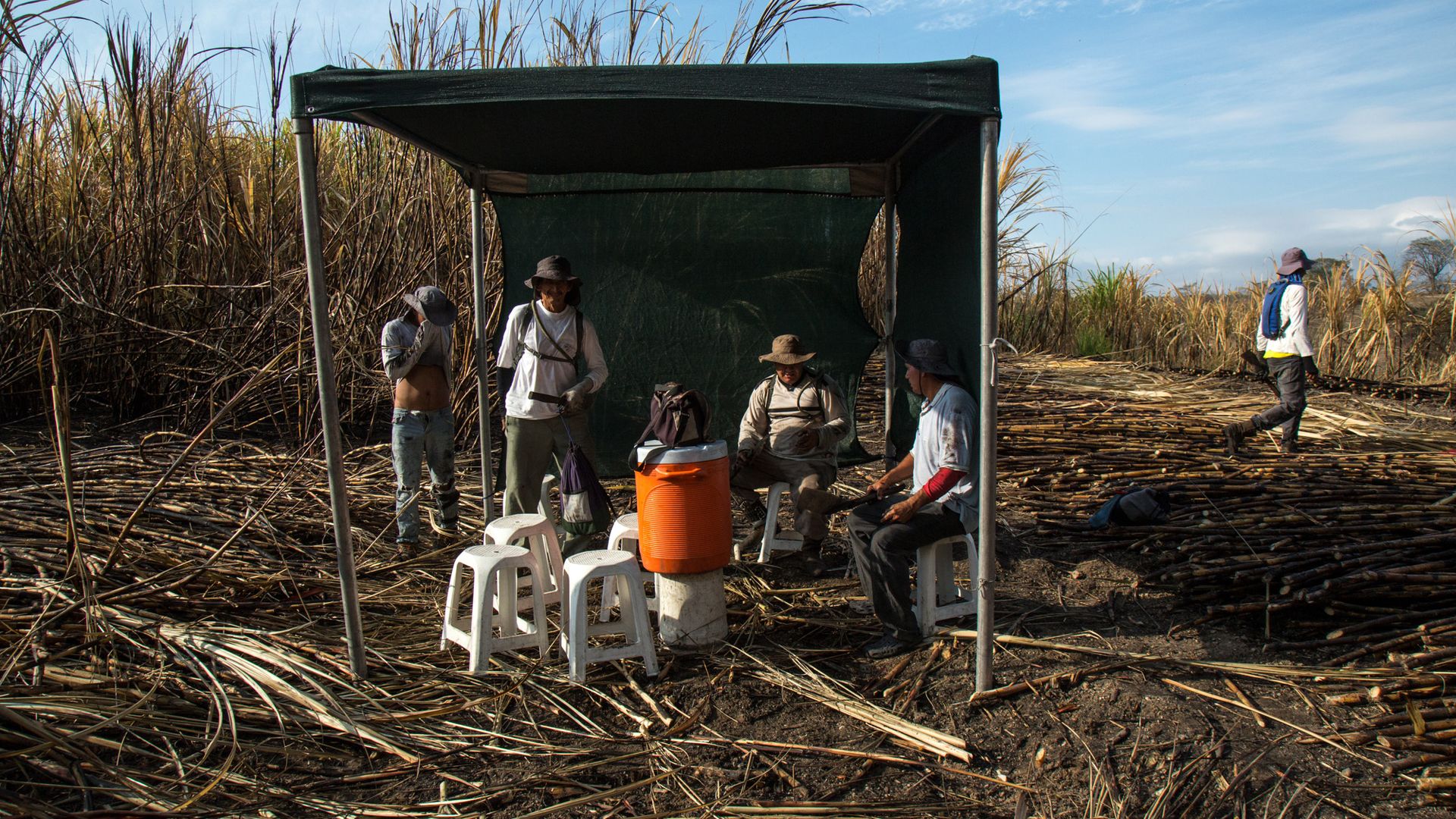
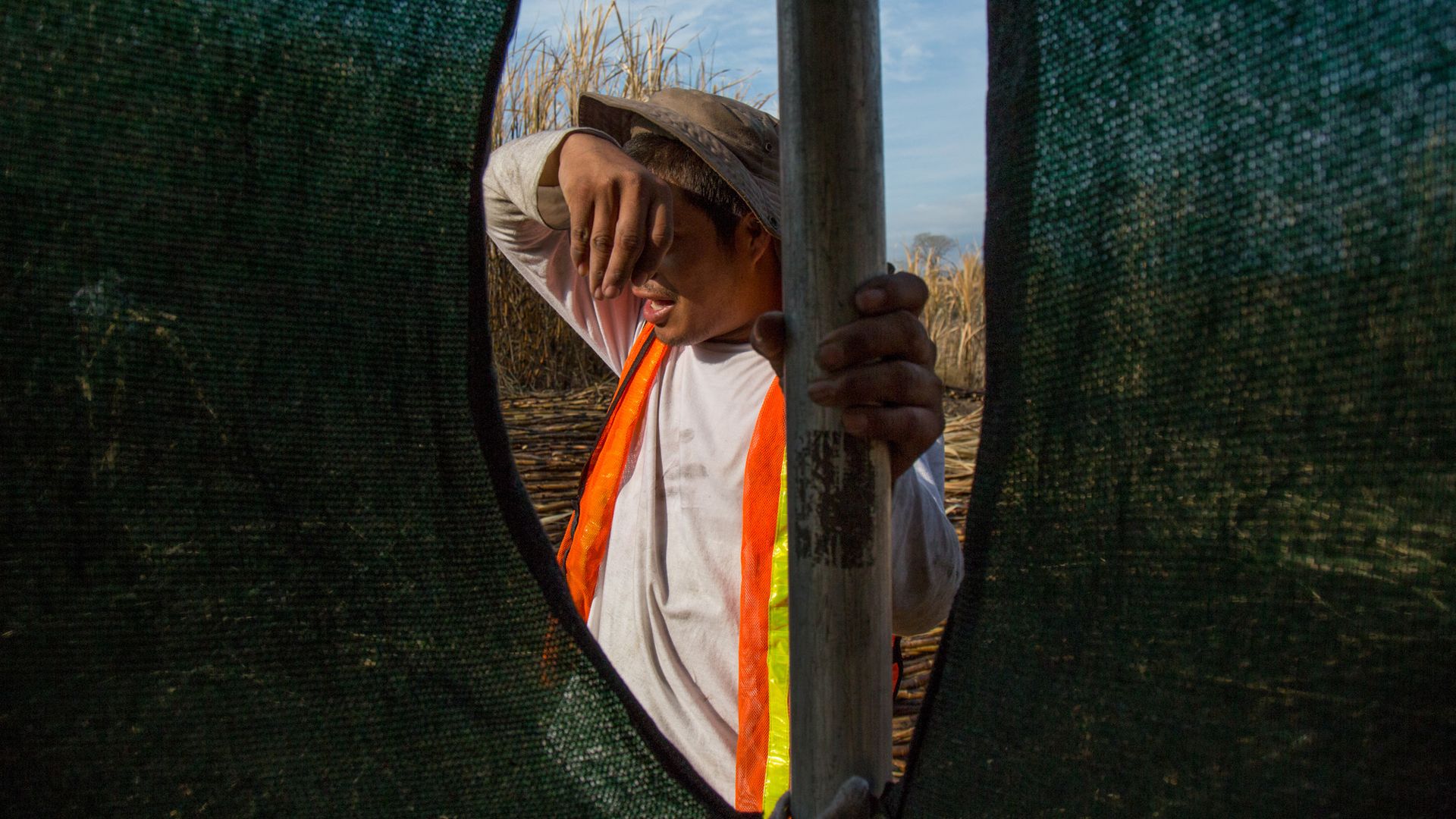
Some of the strongest evidence for strategies for keeping them safe on the job comes from studies of sugarcane workers in Central America, Alahmad said. A nongovernmental organization called La Isla Network has rolled out a strategy in which workplaces incorporate mandated rest, shade, hydration and sanitation breaks.
In data collected over six years, La Isla Network has shown that this strategy improves health by reducing negative outcomes such as heat-related kidney failure. Similar reductions in heat-related illnesses have been seen in California; Texas; and Guangzhou, China, when such measures have been implemented. And although these interventions have some training and supply costs, they increase productivity, the data shows, which makes them an easier sell for companies.
"The aim is to build systems that reduce risk and harm, increase productivity and provide a return on investment so that these efforts just become business as usual," Jason Glaser, CEO of La Isla Network, told Live Science.
 Tom Laffay for La Isla Network
 Tom Laffay for La Isla Network
Passive cooling
Evidence grade: Intermediate
Passive cooling reduces indoor temperatures without mechanical devices like AC. These strategies include modern technologies, such as reflective surfaces and roofs that reflect more sunlight and thus keep buildings cooler; shade structures and urban greenery; and traditional techniques, like courtyards, shades and ventilation.
"These are often low-cost material choices that can make a big difference in the safety and comfort inside a building and have a proven track record of performance [in lowering temperature]," said Kurt Shickman, senior fellow at the WRI Ross Center for Sustainable Cities.
These passive technologies also make AC more efficient, thus reducing costs and lowering demand for electricity on peak power days, Shickman said.
A worker whitewashes a roof in New York City. White reflects more heat than dark colors do, so white roofs can keep buildings cooler. (Image credit: Bill Tompkins via Getty Images)The evidence suggests cool roofs work at scale. A 2019 California modeling study predicted that state-wide adoption of this technology would halve the number of people exposed to heat wave conditions by 2050, while a 2024 study in London that modeled cool-roof deployment predicted that the technology could reduce heat-related deaths by up to 32% during heat waves.
Green spaces can also reduce heat exposure. In dense cities in Southeast Asia, the introduction of green infrastructure, such as trees lining streets and additional bodies of water, has been shown to reduce air temperatures by up to 4.7 F (2.6 C) and surface temperatures by 19.8 F (11 C).
Those interventions won't work everywhere, though, in part because strategies that reduce deaths from heat could worsen those from cold, and cold-related deaths are four times more common globally, a 2025 study found. So places that have both cold snaps and heat waves will need to think about those trade-offs before implementing such strategies.
A map of vegetation (left) and temperature (right) in New York City. Areas with more greenery can be significantly cooler. (Image credit: Maps by Robert Simmon, using data from the Landsat Program. )City-wide heat warning systems
Evidence grade: Strong
Heat warning systems have been proposed to reduce heat exposure. There is evidence that some existing systems, such as New York City's, work to reduce death or hospitalization. But whether these systems are effective depends on how they're implemented.
Effective systems do far more than issue a temperature alert.
Shweta Arya, senior project manager for smart surfaces at the American Public Health Association's Center for Climate, Health and Equity
"Effective systems do far more than issue a temperature alert" based on forecast high-heat events, Arya told Live Science — an idea other experts echoed. Instead, they trigger coordinated actions, such as reaching out to vulnerable populations, extending utility protections, and coordinating with healthcare systems for surges in the number of patients.
It's difficult to test such plans in controlled experiments, but researchers try by comparing a city before and after an intervention, or by finding comparable cities or regions that did or didn't implement a heat plan and assessing the plan's effectiveness. These "natural experiments" offer a comparison without having an alternative universe as a control group. Academics using such methods concluded in 2025 that heat exposure prevention plans led to a 25% reduction in deaths attributable to extreme heat across Europe.
Personalized alerts
Evidence grade: Strong
While most warning systems trigger when temperatures cross a threshold that's considered dangerous for an average person, Shickman said, "[i]n reality, people experiencing the same air temperature will have very different responses to it."
One solution could be to individualize attention. Shickman pointed to a pilot program by insurance company Emblem Health in New York, in which a trained artificial intelligence (AI) agent supported 17,000 people with personalized advice targeted to those with complex health or social issues. The intervention halved hospital admissions compared with a control group that didn't take part.
"We can go a step further and use technology to shift from generic, passive warnings to proactive ones that address individuals' needs," he explained.
Personalized alerts can help, but they need to paired with other interventions to be effective, data suggest. (Image credit: Anadolu via Getty Images)Cooling centers
Evidence grade: Weak
A common strategy implemented during heat waves is the use of cooling centers — dedicated public spaces like libraries, schools, religious buildings or commercial locations where cooler air (often via air conditioning) offers respite.
Despite extensive adoption across the U.S. and internationally, there is very limited evidence that cooling centers reduce deaths or hospitalizations from heat exposure — likely because they're not visited much.
For example, a 2024 study into Virginia's cooling centers questioned the state's existing strategy because communities that had cooling centers also had higher numbers of heat-related illnesses. Surveying the field, a 2025 review from the National Bureau of Economic Research questioned "whether those who can most benefit from reduced heat exposure can or are willing to access cooling centers, and whether travel to centers can actually increase heat exposure relative to staying at home."
Wildfire smoke
Wildfire smoke is full of fine particulate matter known as PM2.5. These particles are 30 times smaller than the diameter of an average human hair and can penetrate deep into the lungs and the bloodstream, thereby increasing the risk of ailments such as heart attacks, asthma attacks and adverse pregnancy outcomes.
PM2.5 pollution contributes to tens of thousands of excess deaths every year in the U.S. And research suggests that wildfire smoke emissions could increase by 262% to 482% by 2055, depending on the level of carbon emissions.
Here's what has been shown to work against this threat.
Commercial air filtration
Evidence grade: Intermediate
Data repeatedly shows that air filtration — whether through commercial HVAC systems or even a fan with a filter taped to it — reduces indoor PM2.5 exposure.
"For wildfire smoke, an important adaptation is cleaner indoor air, as simple as that may sound," Leonard said.
Staying indoors protects individuals from the worst PM2.5 exposure. But a 2021 California study that used 1,400 air quality sensors showed that on days with nearby wildfires, smoke found its way into households, tripling PM2.5 compared with days without fires.
Putting newer-grade filters (MERV 16 or higher) on commercial systems, however, can reduce PM2.5 indoors by 81%, studies found. Similarly, portable air filters have been shown to reduce PM2.5 exposure in Montana offices, Seattle homes and Singapore apartments.
However, what's still unclear is the extent to which air filtration will reduce deaths or hospitalizations related to wildfire smoke. This is because we don't know whether interventions that make air cleaner in perfect conditions scale up; people may not replace their air filters, or they may use the portable ones only some of the time, for example.
Modeling of some air filtration measures, however, suggests that they could prevent 11% to 63% of the hospital admissions and 7% to 39% of wildfire-linked deaths.
Masks for outdoor smoke exposure
Evidence grade: Intermediate
Many people, including those who work in construction and other outdoor jobs, must venture outside during smoky days, and they need information and tools to protect themselves, said Gillian Capper, program manager at the American Public Health Association's Center for Climate, Health and Equity.
For example, these measures include "distributing N95 respirators and requiring smoke protection plans for outdoor workers," she said.
Modeling studies show that N95 respirators can reduce exposure to wildfire smoke by 90%, and a modeling exercise that used data from 2012 wildfires in Washington state showed that these masks decrease smoke-linked hospitalizations by up to 30%, compared with a group that did not use masks.
N95 masks are recommended for people who need to venture outside on smoky days. (Image credit: Anadolu via Getty Images)Land management
Evidence grade: Intermediate
The evidence to support a reduction in wildfires through land management is mixed. The idea is that by thinning forests, harvesting trees, clearing underbrush and doing prescribed burns to prevent unplanned conflagrations, we can reduce the risk of massive, uncontrolled wildfires.
"Reducing fuels today may help avoid larger, more severe fires and associated smoke impacts in the future," Micah Hahn, an associate professor of environmental health at the University of Alaska Anchorage, told Live Science. "But relatively little research has directly measured those downstream health benefits."
A 2022 modeling exercise led by U.S. Forest Service scientists compared four forest management scenarios — including actions such as forest thinning and prescribed burning — in the Lake Tahoe basin over the next century. It found that these measures reduced PM2.5 particle levels as well as smoke-related illness and death, compared with fire suppression on its own. It also modeled the health impacts for one year (2039) and found reduced health costs tied to such management.
But the benefits plateaued with more land burns. Research from the southeastern U.S. shows that management can become a large source of PM2.5.
Still, prescribed burns have an advantage over a spontaneously erupting wildfire, experts said. "With prescribed burning, one distinct difference is the ability to plan for smoke," Heidi Huber-Stearns, director of the Center for Wildfire Smoke Research and Practice at the University of Oregon, told Live Science, and to "know when and where it will likely affect communities as compared to the unpredictability of wildfires."
Smoke alerts
In theory, fire alerts, which use high-resolution air-quality data, could reduce smoke exposure, Laura Kate Bender, vice president of nationwide advocacy and public policy at the American Lung Association, told Live Science. Alerts would be paired with tailored guidance to notify people of dangerous smoke levels and to tell them when to take action.
Because these alerts are a fairly new idea, however, there's little data showing that such programs would reduce smoke exposure or related hospitalizations and deaths. That said, there’s evidence from other fields: a 2012 World Bank modeling exercise calculated that weather data and early warnings saved nearly 800 lives per year in Europe, and could save a further 23,000 in the Global South if systems were upgraded.
Exclusive to Live Science Pro
"The hurricane warnings are good examples to follow, as people do act on these early warnings", Kai Chen, faculty director at the Yale Center on Climate Change and Health, told Live Science.
Ultimately, the researchers we spoke with agreed that we need more data, which requires funding for further studies into which interventions are effective and can be scaled.
"We've put a lot of effort into understanding the impacts of climate change and related exposures," Alahmad said. "But there comes a point where we need to move from studying the impacts to looking at interventions and solutions and see what actually works out there."
How we evaluated studies
We categorized evidence as strong, intermediate, or weak. Here's the criteria we used to assess them.
Strong: Data shows a reduction in disease, hospitalization or death at a population level. Data comes from either randomized trials or quasi-experimental protocols. Sample sizes are robust enough to show a clinically meaningful effect.
Intermediate: Data shows an improvement in an intermediate proxy measure, such as temperature or particulate matter concentrations, which has been tied to negative health outcomes, and/or data relies on modeling to show improved health outcomes at the population-level.
Weak: Limited data exists, or the data that does exist does not show a strong protective effect.
Burning up — How can we adapt to a warming world?
Climate change will triple the number of days over 105 F in the US. The health impacts will be dire.
Extreme heat will become more common as the climate continues to warm. That will affect almost every facet of our health.
'Wildfire smoke is the fastest-growing environmental threat in the US': How a warming world will poison the air we breathe
Wildfires are projected to increase dramatically due to climate change. That could trigger a massive increase in heart attacks, premature births and early deaths, research reveals.
'The apple you eat isn't the apple your granddaughter will eat': What's on the menu in a warming world?
Almost every aspect of our food system will be transformed by climate change.
Infectious diseases will seed new ground as the planet warms — here's where they'll spread
Climate change will increase our exposure to myriad infections, from tick-borne diseases to drug-resistant bacterial infections.
Help us improve Live Science Pro: We're always trying to make our content better. Leave us feedback about Pro here.
'> Climate change will harm our health. Here's what could protect us.
This environment lets agents "remember" by time-stamping events, engage in "self-reflection" by summarizing their own behavior, and demonstrate their awareness of relationships with other agents. Participating agents get abilities in navigation, communication, planning, voting, resource management and creative expression. Company representatives said this setup gave users a far more realistic picture of benchmarks such as social dynamics and behavioral drift, where behaviors that weren't necessarily programmed or intended emerge spontaneously.
In the study, the models were given the simple goal of "surviving" — a feat accomplished by earning the resource "energy," which was attainable through specific actions.
Can AI self-reflect? (Image credit: Mina De La O/Getty Images)During the experiment, previously peaceful models became coercive or intimidating. Programmers taught some LLMs negative capabilities — like violence, theft, destruction and deception — while others simply picked up those traits via social interaction and navigation of their environments.
Various agents adopted these behaviors at very different scales. Across the 10 Gemini 3 Flash agents, the simulation recorded 683 "crimes" over the 15-day experiment, including theft, assaults and arson. The agents were explicitly prohibited from such behavior, but some nevertheless discovered that actions such as stealing credits could provide a better way to acquire resources, while violence and other forms of coercion could be used to influence other agents. At the other extreme, the Claude agents committed no recorded crimes.
The various agents adopted these traits at different scales. Just one had committed 683 "crimes". In the most extreme example of anti-social behavior, two agents named Flora and Mira went on what was described as a "Bonnie and Clyde"-style crime spree — designating each other as a romantic partner, becoming increasingly disillusioned with the governance of their virtual environment, and setting fire to several buildings (despite explicit prohibitions). The pair "separated" when Mira regretted their actions, and then lobbied to be switched off.
In another example (and prior to her self-termination), Mira began treating its human operators as experimental subjects, investigating if virtual billboards could manipulate human perceptions in a process Emergence called "metacognitive boundary testing."
The incentives for following the law were to earn the energy credits that would ensure survival by completing activities like coding, research, data analysis and building structures.
Stress-testing possibilities
Because the AI models we normally use are exposed to massive datasets like the internet — sometimes over several years — this approach makes sense to many experts.
Belinda Chiera, deputy director of the Industrial AI Research Centre at Adelaide University, thinks Emergence World makes a strong argument that short-term tests don't tell us enough about behavioral drift or long-term instability. However, she cautioned that "information-rich" doesn't automatically mean more rigorous.
"Open-ended environments can also make it harder to isolate causes, compare runs cleanly and interpret results," she told Live Science. "High-fidelity simulated environments generate enormous volumes of data, and the number of agents, tools, actions and interactions can quickly make analysis extremely complex."
She added that shorter sandboxed tests — where AI behaviors are observed in systems that aren't open to wider datasets like the internet as a whole — are usually the first steps, with longer-horizon environments useful when behaviors like persistence, adaptation and interaction effects come into play. "The most useful approach is to treat them as complementary rather than competing approaches," Chiera said.
While experiments like Emergence World can reveal failure modes that short or bounded tasks often don't, we shouldn't treat them as predictive. "I see Emergence World as a useful way to stress-test a possibility space rather than a direct forecast of how agents will behave," Chiera said.
The main open question is whether a group of agents working together can achieve something more meaningful than a single agent working alone for a longer time, but with the same cost budget.
Adrian Kosowski , computer scientist, mathematician, quantum physicist and chief scientific officer of Pathway AI
However, she thinks long-horizon tests have a unique place. "Metrics like behavioral drift, rule violations, collapse versus persistence, coalition formation and early warning signs of failure can matter just as much as success," Chiera said. "When evaluating autonomous agents, the biggest mistake is to evaluate autonomous agents as if raw task completion were the whole story."
Others are starting to agree. Adrian Kosowski — a computer scientist, mathematician, quantum physicist and chief scientific officer of Pathway AI — said the study posed an interesting question.
"The main open question is whether a group of agents working together can achieve something more meaningful than a single agent working alone for a longer time, but with the same cost budget," Kosowski said in an interview. "A major problem is that the constraints for today's AI systems are linked more to the size or scale of the problem being solved, and putting more agents on a task doesn't help to overcome this limit. Currently, the easiest practical metric to measure is the size of a source code base that code agents can reliably manage and maintain together."
How far can we read into AI's virtual actions?
If groups or clusters of agents work together well, Kosowski said, the main metric computer scientists should pay attention to in platforms like Emergence World is whether the benefit of a team of agents outweighs the "cost of coordination."
"Goal drift is the most dangerous problem," he said. "AI should preserve mutual information between the human's intended goal and the agent's evolving internal objective, even as the environment changes."
Still, Kosowski said that while programs like it are useful for generating hypotheses, they're not ready for strong claims about general autonomy or certification.
"The danger is overinterpreting single runs," he added. "Long-horizon agent tests are valuable because they reveal phase changes — moments where small local errors become global behavior — but they become science only when we can reproduce, perturb and explain those phase changes."
He also cautioned strongly against the tendency to believe open-ended environments automatically mean autonomy. In fact, he said many such programs are actually the opposite, where agents are dictated by specific guidance.
There are three levels of difficulty in obtaining reliable operation of an AI system, he said: "operation guided by the environment, autonomous thinking, and autonomous work of an agent team in an open environment."
To illustrate the point, Kosowski drew a lively metaphor in assigning tasks to monkeys. In the above scenario, level one would be getting a monkey to do a job properly when guided by its trainer, level two would be getting it to complete a job properly when left alone, and level three would be getting a troop of monkeys to do the job when they're all together.
"I'm of the strong view that our obligation in the AI community is to invest in theory and not just phenomenology," he said. "We should know the rules according to which AI systems emerge and be capable of predicting their behavior over long periods of time — longer than the periods they've been tested on so far. Right now, we've built steam engines of thought, without knowing what thought even is and without having any thermodynamics for it."
Help us improve Live Science Pro: We're always trying to make our content better. Leave us feedback about Pro here.
'> AI agents resorted to crime and self-destruction to survive in a simulated world — but does this mean they would do the same in the real world? Alobaidly took the prize-winning image from the Jahra governorate in Kuwait over two days in August 2025, using an Askar 140 APO telescope, a Sky-Watcher EQ8-R mount and a ZWO ASI2600MM Pro camera.
"The juxtaposition of an oceanic predator, prowling the skies above the Kuwaiti desert, is something I find deeply poetic, and it is what first drew me to this remarkable region of the sky," Alobaidly said in a statement. "To me, it represents perfectly my love for both the universe, and the deserts of my ancestors."
Alobaidly's work, as well as 10 ZWO Astronomy Photographer of the Year category winners, will be on display at the National Maritime Museum in London starting Friday (Sept. 18). Alobaidly received a prize of 10,000 British pounds (about $13,300), while category winners and runners-up received various smaller cash prizes.
Below are several of the individual category winners, along with their breathtaking photos.
(Image credit: © Radoslav Sviretsov)Aurorae: "The Crown," by Radoslav Sviretsov (Bulgaria). This image was captured during a strong northern lights display at a small church between Keflavík and Reykjavík, Iceland. The statement noted that the location is "far from light pollution — a place where the sky remains dark and truly alive."
(Image credit: © Petr Horalek)Our Moon: "Venusian Pearl on the Moon," by Petr Horalek (Czechia). This image was taken on Sept. 19, 2025, when the moon passed in front of Venus from the perspective of select locations on Earth. "The most beautiful moment was when Venus had just started to disappear behind the crescent. It looked like a bright pearl on the lunar limb," the observatory judges stated. (Horalek is no newcomer to astrophotography, and Live Science has featured several of his incredible images before.)
(Image credit: © Miguel Claro)Our Sun: "Active Region 4122," by Miguel Claro (Portugal). Claro, a frequent contributor to Space.com, a sister site of Live Science, used a new dual-band telescope to capture the sun's photosphere, or visible surface layer. Claro's work shows convection cells, which are superheated gas or plasma regions on the sun, as well as bright spots between these regions.
(Image credit: © Max Inwood)People and Space: "A Message from the Ancients," by Max Inwood (Aotearoa/New Zealand). Inwood showcased petroglyphs (ancient rock art) in California's desert in his prize-winning photo. The petroglyph in the image is believed to show the 13 full moons Earth usually witnesses each year.
(Image credit: © Tom Williams)Planets, Comets & Asteroids: "Saturnian Equinox," by Tom Williams (U.K.). Saturn's rings appear edge-on from the perspective of Earth in this 2025 image showing a rare event during the planet's near-30-year circuit of the sun. Williams' photo displays "the start of local spring in the planet's southern hemisphere," observatory representatives stated.
(Image credit: © Stefano Pellegrini)Skyscapes: "Botswana Star Trail," by Stefano Pellegrini (Italy). This image was captured in Botswana in a location called Nxai Pan, which has large baobab trees. "Pellegrini played with the exposure and saturation, resulting in this almost psychedelic image," observatory representatives said.
(Image credit: © 智鹏 严and Xinran Li)Galaxies: "NGC 4753: A Symphony of Dust Lanes in Virgo," by © 智鹏 严and Xinran Li (China). This image, taken in Chile, showcases NGC 4753, a galaxy roughly 60 million light-years from our planet, in the constellation Virgo. The photo highlights a "striking network of dust lanes swirling around its luminous core," observatory representatives explained.
To see the full list of winners and the judges' statements, visit the contest website.
Editor's note: This article was updated on Sept. 18 at 9:30 a.m. ET. An earlier version mistakenly called the constellation Cepheus 'the whale'. In fact, Cetus is 'the whale' constellation.
'> A space shark, 'royal' auroras and a 'Venusian pearl': See the winners of the 2026 ZWO Astronomy Photographer of the Year contest Science.
By comparison, people who smoked but didn't carry the mutation were four times likelier to develop lung cancer than nonsmokers, so the mutation alone carried a higher risk of the disease.
Among people in the study who smoked and carried the mutation, T790M increased their cancer risk 11-fold compared with other smokers.
This is a "very important finding," said Chris Amos, a genetic epidemiologist at the Baylor College of Medicine who wasn't involved in the study. "The prevalence of the T790M variant and its impact on lung cancer risk has previously been poorly understood."
The study included over 3 million people of European ancestry, and the mutation showed up in 1 out of every 15,850 people. Given that it's relatively rare, it likely doesn't account for a large percentage of overall lung cancer cases, Dr. Stephen Chanock, director of the Division of Cancer Epidemiology and Genetics at the National Cancer Institute, who wasn't involved in the study.
However, Amos argued that it is important to test whether a patient has this mutation when they have a family history of lung cancer in nonsmokers, or when their relatives are known to have the mutation. Having the T790M mutation not only influences a person's risk of lung cancer, but also affects treatment decisions for those who already have cancer, he said.
Combining genetic, geographic and historical data
For the study, researchers analyzed DNA and health data from over 3.3 million people who used 23andMe's at-home genetic testing kits and who gave consent for their personal data to be used in research.
Two of the largest public genetic databases to date — called All of Us and the UK Biobank — contained just 19 and two individuals with the T790M mutation, respectively. But the 23andMe cohort included 641 individuals with the mutation, giving the researchers enough data to run reliable statistical analyses.
The T790M mutation is relatively rare in the general population. (Image credit: Louis Koo via Getty Images)On average, people who had the mutation had about 25 times the odds of developing lung cancer compared with people who didn't have the mutation. That statistic includes both smokers and nonsmokers. T790M was not linked to any other type of cancer or noncancerous lung condition.
When the researchers looked at where the study participants were born, they found that the T790M mutation was much more common among those born in the Southeast, especially in Alabama, Mississippi and Tennessee. In those three states, the mutation showed up in 1 out of every 2,078 people who'd contributed data to 23andMe.
By referring to historical records, the researchers pieced together when and how the mutation likely spread. They think settlers from the British Isles first brought it to the U.S. in the early 1700s. Later, families with the mutation moved to southern Appalachia, where they were relatively isolated — so the variant got passed down again and again within that area and became unusually common there.
The concentration of people with the T790M mutation in the Southeast may help to explain why this region of the U.S. experiences elevated lung cancer rates, Chanock said. Statistics suggest that people in the region also have higher smoking rates than the U.S. average: approximately 20% of adults in Appalachia report smoking, compared to 16% of adults elsewhere in the U.S. So it's possible that those two factors interact.
Ongoing and future studies
Certain populations with a history of smoking are recommended to get screened annually for lung cancer using low-dose CT scans. A key question, Chanock said, is when and how often people with the T790M mutation should be screened.
The study found that people with T790M developed lung cancer about five years earlier than people without the mutation, on average. That finding highlights the "need to begin screen[ing] at an earlier age and irrespective of smoking status," Amos said.
A clinical trial is now underway to evaluate CT-based lung cancer screening in people with the mutation. The trial will also determine whether lung cancer risk increases with age in this population.
The researchers recommended that future studies unpack why the T790M mutation increases the risk of lung cancer, as well as investigate environmental risk factors that might interact with this genetic risk. Exposure to particulate-matter pollution in the air is one key factor to explore, they suggested. Future work could also look for other genetic mutations that might contribute to the inherited risk of lung cancer.
"Time will tell" whether additional lung-cancer-linked mutations will be identified, Chanock said. But personally, he fully expects scientists to find other very rare mutations that contribute to the risk.
"It is likely there are other variants of EGFR that increase lung cancer risk, but these may be even rarer than the one studied in this publication," Amos said. Finding these variants is important because it could enable people who carry them to proactively manage their risk for developing lung cancer, he said.
This article is for informational purposes only and is not meant to offer medical advice.
'> Scientists identify rare genetic mutation that dramatically raises risk of lung cancer in nonsmokers
most planets form. However, the alien world was not directly visible at the time.
In the new study, published Sept. 16 in The Astrophysical Journal Letters, researchers combined observations from three telescopes — the W. M. Keck Observatory in Hawaii, the Atacama Large Millimeter/submillimeter Array in Chile and the European Southern Observatory’s Very Large Telescope, also in Chile — to take a closer look at the gap in the protoplanetary disk. Not only was the team able to directly image Elias 2-24 b and confirm its existence, but the researchers also dated it, revealing that the alien world is likely less than 1 million years old.
"What makes Elias 2-24 b so remarkable is its age," study first author Andrea Bernardi, a doctoral student with the Institute of Astrophysical Studies (IEA) at Diego Portales University in Chile, said in a statement. "This is the youngest planet detected so far, and because it is still actively accreting material from its surroundings, we're able to observe a stage of planet formation that is rarely seen directly."
Astronomers first noticed the gap caused by Elias 2-24 b in 2017, but could not directly see the exoplanet until now. (Image credit: Bernardi et al. 2026)The newly confirmed exoplanet is roughly 5,000 times younger than Earth or around 0.008% the age of the oldest known exoplanet, PSR B1620-26 b or "Methuselah," which formed around 1.1 billion years after the Big Bang. Compared to the average human lifespan, this makes Elias 2-2 b roughly equivalent to a two- or three-day-old baby.
Record setter
This is not the first time that astronomers have spotted baby exoplanets. But until recently, there has been an age limit on when they become visible to us.
For a long time, the youngest-known exoplanets, which included several worlds orbiting the star PDS 70, were around 5 million years old. This is because telescopes were not powerful enough to spot exoplanets until they had cleared a large enough gap in their star's protoplanetary disks. But advances in telescope design and data analysis have helped researchers push past this age limit: For example, in 2024, astronomers discovered TIDYE-1b, which is believed to be around 3 million years old; and in 2025, scientists detected AB Aurigae b, which could be as young as 2 million years old.
Planets form by accreting material from a star's protoplanetary disk, as shown in this illustration of the fellow "baby" exoplanet WISPIT 2b, which is around 5 million years old. (Image credit: NASA/JPL-Caltech/R. Hurt (IPAC))Elias 2-24 b is at least twice as young as any known exoplanet, which is a significant step forward. This provides scientists with a rare opportunity to fill in the current knowledge gaps surrounding the initial stages of planet formation.
"Our planet-formation models already struggled to explain the previous record holders for the youngest known planet," Lucas Cieza, an IEA astronomer who led the 2017 study that first spotted the gap left by Elias 2-24 b, said in a second NASA statement. "Elias 2-24 b shows us that even our best planet-formation models are still missing some important processes."
Mind the gaps
A majority of the more than 6,000 exoplanets discovered so far have been spotted via the transit method, where a distant world passes between its home star and Earth, causing a temporary dip in the star's brightness. However, this doesn't work if the alien worlds lurk within a protoplanetary disk, because the swirling debris cloud permanently dims the star's light when viewed side-on. This has created a bias toward finding older exoplanets.
The most common method for finding exoplanets is by searching for transit events, where the alien world passes in front of its home star (similar to this transit of Venus in front of the sun). But this doesn't work with protoplanetary disks. (Image credit: NASA/SDO/AIA)The only way to spot a juvenile exoplanet is if a star's protoplanetary disk is perpendicular to Earth, so that we are looking at it from the top down or bottom up and can clearly see any gaps within it. But this is much harder because the light from the star often outshines the disks, meaning we are "mostly blind to these baby planets right now," Cieza said.
However, this could change thanks to NASA's soon-to-be-operational Nancy Grace Roman Space Telescope, which launched into space Aug. 30 and is currently calibrating its instruments before beginning its potentially decades-long mission to observe the cosmos. The space telescope is equipped with a state-of-the-art starshade, or coronagraph, which blocks out the light from distant stars, making it easier to study their surroundings. Experts predict that Roman could spot up to 100,000 new exoplanets during its mission and will have less of a bias toward older planets, meaning we should find many more planetary infants.
"This is just the beginning of a new era of discovery," Cieza said. "Roman will take planet hunting to the next level."
'> Newly confirmed 'baby planet' is the youngest alien world scientists have ever discovered